
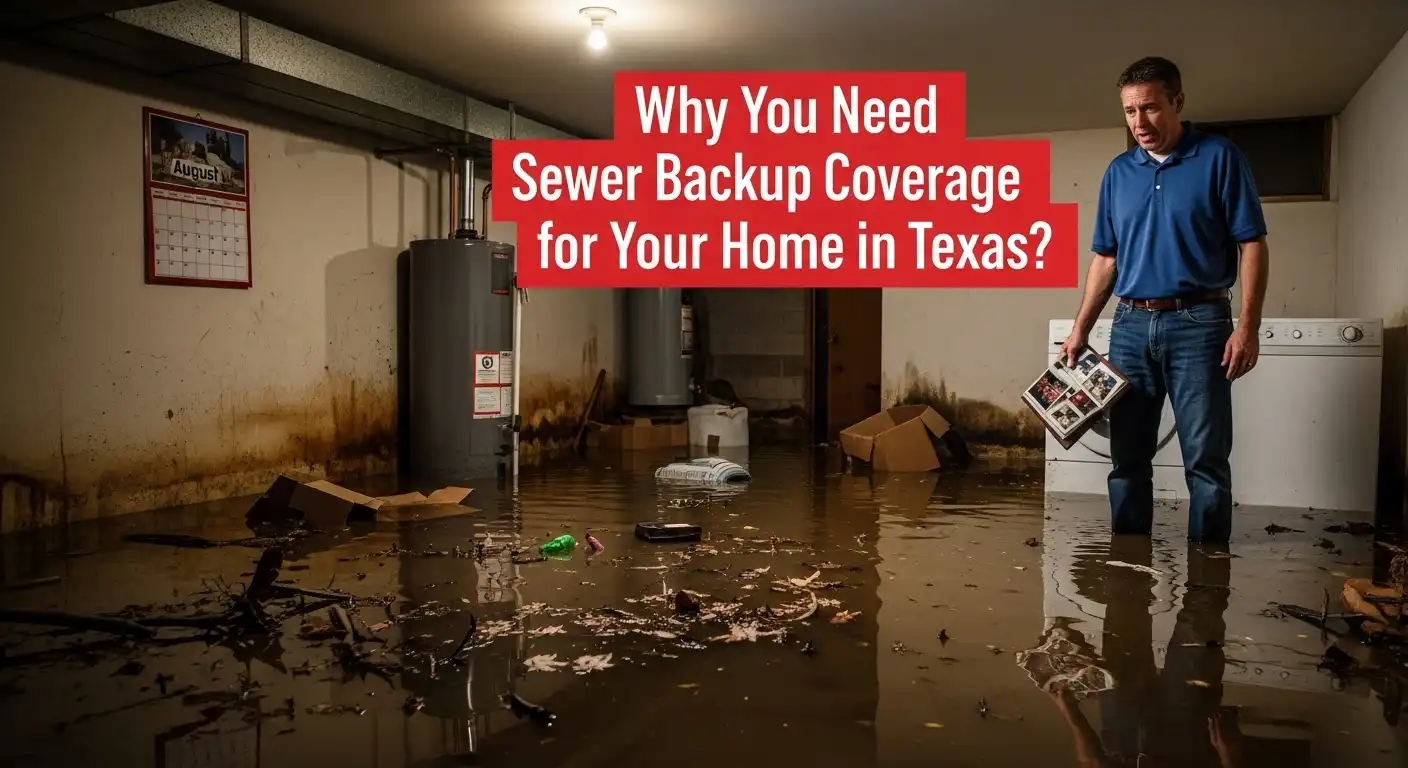
Your homeowners’ insurance probably doesn’t cover one of the most expensive disasters that can hit your Texas home: sewage backing up into your house. This type of damage can cost $10,000 to $50,000 to clean up and repair, yet most standard policies exclude it.
Sewer backup coverage is an optional insurance add-on that protects you when wastewater floods your home through drains, toilets, or sump pumps. With Texas’s aging infrastructure, heavy rainfall, and urban growth, this coverage isn’t just nice to have; it’s essential protection for your property and health.
This guide explains what sewer backup coverage is, why Texas homes face higher risks, what it protects, and whether it’s worth the cost for your situation.
What Is Sewer Backup Coverage?
Sewer backup coverage is an optional home insurance that pays for damage when wastewater backs up into your house through your plumbing system. It’s also called water backup coverage or sump pump overflow insurance.
Standard homeowners insurance excludes sewer backup damage because it’s considered preventable or related to maintenance issues. You must add this coverage separately to your policy, typically as an endorsement.
What sewer backup coverage includes:
- Damage from sewage backing up through drains, toilets, or tubs
- Water backup from floor drains and basement drains
- Sump pump failures and overflows
- Cleanup and sanitation costs
- Repair or replacement of damaged property
- Temporary living expenses during repairs
Coverage limits typically range from $5,000 to $25,000, though some insurers offer higher limits. You choose your coverage limit when adding the endorsement to your homeowners policy.
The coverage pays for both the physical damage to your home and the costly professional cleanup required when raw sewage enters your living space. This includes removing contaminated materials, sanitizing surfaces, and restoring your home to safe living conditions.
Not sure if your current policy includes sewer backup coverage? Review your homeowners’ insurance documents or contact your agent for clarification.
Why Sewer Backup Is a Common Risk in Texas Homes
Texas homeowners face unique sewer backup risks that make this coverage particularly important. Understanding these risks helps you make informed insurance decisions.
Aging Sewer Infrastructure
Many Texas cities operate on sewer systems built 50-100 years ago. These aging pipes crack, collapse, and clog more frequently, causing backups into homes connected to the system.
Cities with older infrastructure problems:
- Houston (parts of the system date to the early 1900s)
- Dallas (ongoing infrastructure replacement projects)
- San Antonio (combined sewer system areas)
- Fort Worth (aging clay pipes in older neighborhoods)
- Austin (rapid growth straining existing systems)
Old clay and cast-iron pipes deteriorate over time. Tree roots penetrate cracks, debris accumulates, and the pipes eventually fail. When the main sewer lines back up, wastewater has nowhere to go except back into connected homes.
Heavy Rainfall and Flash Flooding
Texas experiences intense storms that overwhelm sewer systems. When excessive rainwater enters sewer lines, the system can’t handle the volume and backs up into homes through floor drains and toilets.
High-risk weather events in Texas:
- Flash floods (common in Hill Country and urban areas)
- Hurricane and tropical storm rainfall (coastal regions)
- Severe thunderstorms (spring and summer months)
- Prolonged heavy rain events (multi-day storms)
The Insurance Information Institute reports that water damage claims have increased significantly in Texas over the past decade, with sewer backups representing a growing portion of these claims.
Rapid Urban Development
Texas cities are growing faster than infrastructure can keep up. New construction adds strain to existing sewer systems that weren’t designed for current population levels.
Development impact on sewer systems:
- Increased wastewater volume from new homes
- More impervious surfaces (roads, parking lots) increase stormwater
- Construction debris entering sewer lines
- Older neighborhoods bearing burden of the overall system capacity
Clay Soil Expansion and Contraction
Much of Texas sits on expansive clay soil that swells when wet and shrinks when dry. This movement shifts and cracks sewer pipes, creating openings for backups and leaks.
The repeated wet-dry cycles during Texas’s variable weather patterns cause continuous stress on underground plumbing. Pipes crack, joints separate, and blockages form more easily in damaged sections.
Tree Root Intrusion
Texas’s mature trees, particularly in established neighborhoods, send roots seeking water sources. Sewer pipes provide moisture, and roots grow into cracks and joints, eventually blocking the entire pipe.
Trees that commonly cause sewer line problems in Texas:
- Live oak and other oak varieties
- Willow trees
- Cottonwood and poplar trees
- Ash trees
- Elm trees
Combined Sewer Systems in Older Areas
Some older Texas neighborhoods use combined sewer systems that handle both sewage and stormwater in the same pipes. During heavy rain, these systems easily overflow, sending sewage into homes.
Modern separated systems handle sewage and stormwater independently, but upgrading takes years and billions of dollars. Until then, homeowners in these areas face elevated backup risks.
Protect your home from unexpected sewer backup damage. Get a quote for sewer backup coverage and see how affordable this protection can be.
What Sewer Backup Coverage Protects You From
Sewer backup coverage handles the extensive damage and cleanup costs when wastewater enters your home. Understanding what’s covered helps you appreciate the value of this protection.
Property Damage Restoration
When sewage backs up, it contaminates everything it touches. Coverage pays to repair or replace damaged property throughout your home.
Covered property damage:
- Flooring (carpet, hardwood, tile, laminate)
- Drywall and insulation (must be removed when contaminated)
- Baseboards, trim, and molding
- Furniture and upholstered items
- Appliances (washers, dryers, water heaters)
- Electronics and equipment
- Personal belongings and clothing
- HVAC systems (if affected by backup)
Professional Cleanup and Sanitation
Sewage contains dangerous bacteria, viruses, and pathogens that require professional remediation. Coverage pays for specialized cleanup services that safely remove contamination.
Professional cleanup services covered:
- Emergency water extraction and removal
- Contaminated material removal and disposal
- Antimicrobial treatment and sanitization
- Air quality testing and purification
- Industrial dehumidification and drying
- Odor removal and deodorization
Professional cleanup typically costs $7-$15 per square foot for sewage contamination. A 1,000-square-foot basement backup can cost $7,000-$15,000 just for cleanup, before any repairs.
Sump Pump Overflow Damage
If your sump pump fails or can’t keep up with water volume, the resulting damage is covered. This includes mechanical failures, power outages, and overwhelmed systems during storms.
- Basement flooding from sump pump failure
- Water damage to finished basement areas
- Damage to stored items and belongings
- Foundation and structural concerns from water intrusion
Drain Backup From Any Source
Coverage applies regardless of which drain the backup comes through. Whether sewage enters through toilets, bathtubs, sinks, or floor drains, you’re protected.
- Toilet backups and overflows
- Bathtub and shower drain backups
- Kitchen and bathroom sink backups
- Laundry room drain backups
- Basement floor drain backups
- Garage floor drain backups
Temporary Living Expenses
Severe sewer backups often make homes temporarily uninhabitable. Coverage pays for hotel stays, restaurant meals, and other living expenses while your home undergoes professional remediation.
- Hotel or rental accommodation costs
- Restaurant meals and food expenses
- Pet boarding fees
- Additional transportation costs
These expenses add up quickly. A family of four spending 10 days in a hotel and eating out can easily incur $3,000-$5,000 in additional living costs.
Preventive Measures and Mitigation
Some policies cover preventive measures you take during a backup event, such as renting equipment or hiring emergency services to minimize damage.
- Emergency plumber service calls
- Equipment rental (pumps, dehumidifiers)
- Temporary barriers and containment
- Immediate damage mitigation efforts
What Home Insurance Usually Does Not Cover
Understanding what standard homeowners insurance excludes prevents costly surprises when you need coverage most. These exclusions make sewer backup coverage essential.
Standard Policy Exclusions
Basic homeowners’ insurance policies specifically exclude water damage from sewer backups, drain backups, and sump pump failures. You’ll see this exclusion listed in your policy documents.
What standard policies don’t cover:
- Sewage backup through any drain or toilet
- Water backup from sewer or drain lines
- Sump pump overflow or failure
- Subsurface water entering through drains
- Gray water backup from washing machines
Maintenance-Related Damage
Neither standard policies nor sewer backup coverage pay for damage caused by lack of maintenance or neglect. These exclusions apply to preventable problems.
- Gradual pipe deterioration you ignored
- Backups from unmaintained sump pumps
- Damage from known defects you didn’t repair
- Backups caused by flushing inappropriate items
- Tree root intrusion you were aware of but didn’t address
Flood Damage vs. Sewer Backup
Homeowners often confuse flood insurance with sewer backup coverage, but they’re different. Flood insurance covers rising water from outside sources, while sewer backup covers water coming through your plumbing.
Flood insurance covers:
- Rising water from rivers, lakes, or storms
- Water entering through windows and doors
- Storm surge and coastal flooding
Sewer backup coverage covers:
- Water backing up through drains and toilets
- Sewage coming from your plumbing system
- Sump pump failures and overflows
You may need both coverages for complete protection. Sewer backup coverage doesn’t replace flood insurance, it complements it.
Sewer Line Repair Costs
Sewer backup coverage doesn’t pay to repair or replace the actual sewer line or pipes. It only covers damage inside your home from the backup itself.
Not covered by sewer backup insurance:
- Repairing or replacing broken sewer lines
- Digging up and fixing underground pipes
- Removing tree roots from sewer lines
- Camera inspection and diagnostic costs
- Preventive sewer line maintenance
For sewer line repair costs, consider separate service line coverage or a home warranty that includes plumbing systems.
Cost vs. Risk Analysis
Consider the financial math: $150 annual premium protects against $15,000 in average cleanup and repair costs. You’d need to go 100 years without a backup to break even by self-insuring.
The Insurance Information Institute reports that one in 50 homeowners files a water damage claim annually. With Texas’s infrastructure challenges, your actual odds may be higher.
Compare sewer backup coverage quotes from top Texas insurers today. Visit gettia.com to find affordable protection for your home.
Is Sewer Backup Coverage Worth It for Texas Homeowners?

For most Texas homeowners, sewer backup coverage is absolutely worth the cost. The combination of aging infrastructure, severe weather, and high cleanup expenses makes this coverage essential financial protection.
When You Definitely Need Coverage
Certain situations make sewer backup coverage crucial rather than optional:
- Your home has a basement or below-grade living space
- You live in an older neighborhood (pre-1980 construction)
- Your area experiences frequent heavy rainfall
- The local sewer system is known to have backup issues
- You have a finished basement with valuable items
- Mature trees near your sewer line
- You can’t afford $10,000-$50,000 in unexpected repair costs
- Your city uses combined sewer systems
- Previous owners or neighbors experienced backups
Financial Impact Without Coverage
Without sewer backup coverage, you pay all costs out of pocket. Here’s what that means financially:
Average costs for sewer backup damage:
- Minor backup (one room) = $3,000-$8,000
- Moderate backup (multiple rooms) = $10,000-$25,000
- Severe backup (entire floor) = $30,000-$50,000
- Catastrophic backup = $50,000+
These costs include professional cleanup, disposal, sanitization, repairs, and replacement of damaged property. Most homeowners can’t absorb these expenses without significant financial hardship.
Health and Safety Considerations
Beyond financial protection, sewer backup coverage ensures professional remediation of dangerous contamination. Sewage contains harmful pathogens that cause serious illness.
Health risks from sewage exposure:
- E. coli and other bacteria
- Hepatitis A virus
- Parasites and pathogens
- Respiratory infections from airborne contaminants
- Skin infections from direct contact
Professional cleanup companies have specialized equipment, training, and protocols to safely remove contamination. Without insurance, homeowners might attempt inadequate DIY cleanup that leaves dangerous pathogens behind.
Long-Term Property Value Protection
Proper professional remediation preserves your home’s value. Inadequate cleanup can lead to mold growth, lingering odors, and structural damage that reduces property value and creates disclosure issues when selling.
Homes with documented sewage backup history, especially those without professional remediation, face challenges during sales. Buyers demand discounts or walk away entirely.
Peace of Mind Value
Beyond the financial math, sewer backup coverage provides peace of mind. You won’t lie awake during Texas thunderstorms worrying about sewage backing up into your home.
For $10-$25 per month, you eliminate a major financial worry and ensure a professional response if disaster strikes. That’s valuable protection for any homeowner.
How to Purchase Sewer Backup Coverage
Adding sewer backup coverage is straightforward:
- Contact your current homeowners’ insurance company
- Request a quote for water backup coverage endorsement
- Choose your coverage limit ($5,000-$25,000 typical)
- Review the premium cost and add to your policy
- Coverage usually starts immediately or at the next renewal
If your current insurer doesn’t offer competitive rates, shop with other companies. Rates vary significantly between insurers for the same coverage.
Protect Your Texas Home Today
Don’t wait for a sewage backup disaster to wish you had coverage. Get personalized quotes from top-rated Texas insurance providers now. Visit gettia.com to compare rates, select the right coverage limit, and secure your protection in minutes. Your home deserves this essential safeguard.
Frequently Asked Questions About Sewer Backup Coverage in Texas
Does homeowners’ insurance cover sewer backup in Texas?
No. Standard homeowners’ insurance policies exclude sewer backup damage. You must add optional sewer backup coverage (also called water backup coverage) as an endorsement to your policy for protection.
How much sewer backup coverage do I need for my Texas home?
Most Texas homeowners choose $10,000-$15,000 coverage limits. Consider your home’s size, basement value, and potential cleanup costs. Homes with finished basements or expensive flooring should opt for $15,000-$25,000 limits.
Will sewer backup coverage pay to fix my broken sewer line?
No. Sewer backup coverage only pays for damage inside your home from the backup itself. It doesn’t cover repairing or replacing the actual sewer line. Consider separate service line coverage for pipe repairs.
Can I buy sewer backup coverage after experiencing a backup?
No. You cannot add coverage after a problem occurs. Most insurers also have waiting periods (often 14-30 days) before new sewer backup coverage takes effect. Purchase protection before you need it.
Does sewer backup coverage include mold removal from the backup?
Usually, yes, if the mold results directly from the covered sewer backup and is discovered quickly. However, mold from gradual leaks or pre-existing conditions isn’t covered. Professional cleanup prevents most mold issues.