
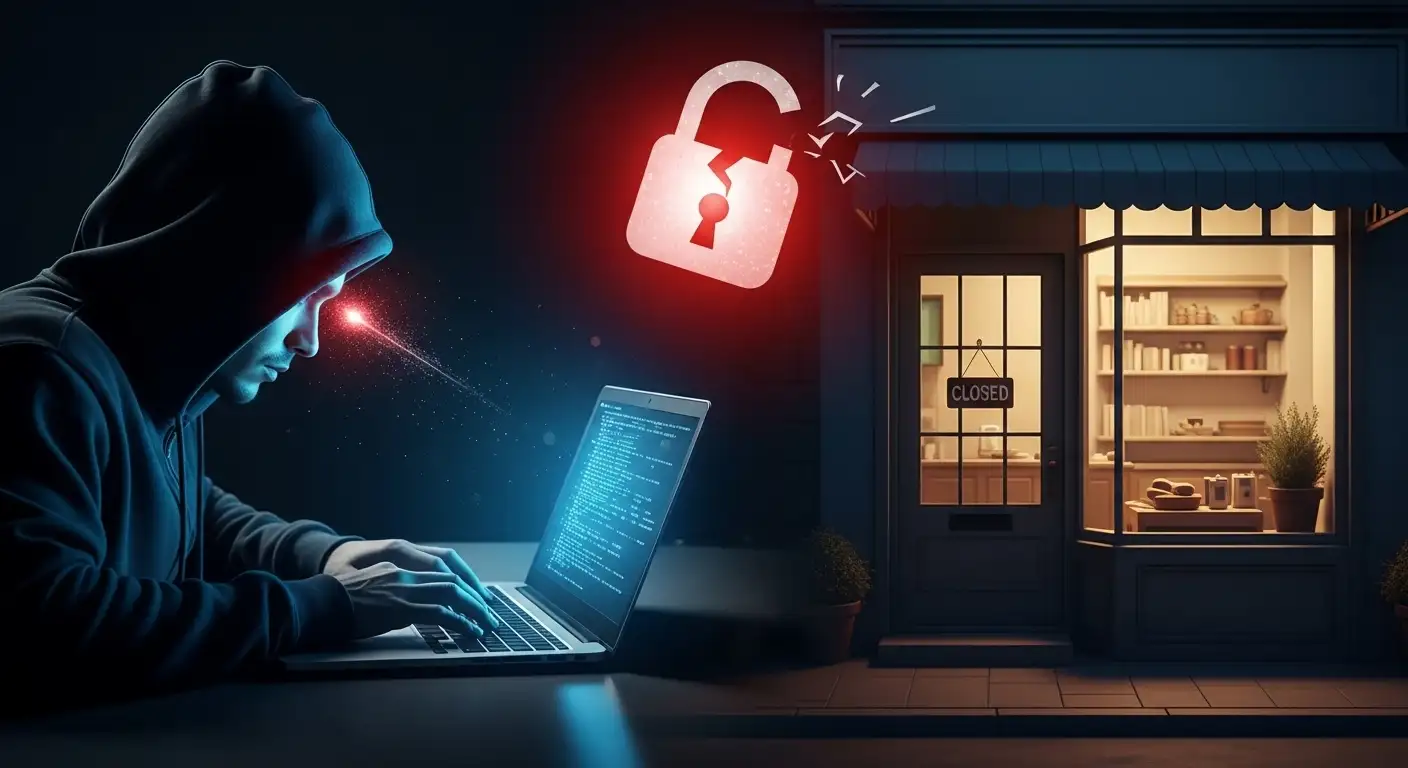
Cyberattacks against small businesses continue to rise, and smaller companies remain common targets because they often have fewer cybersecurity resources than larger organizations. Small businesses can be vulnerable because cybercriminals often view them as easier targets than larger corporations.
The explosion in attacks stems from a perfect storm: weak security infrastructure, valuable customer data, and limited resources to defend against modern threats. Hackers know small businesses lack enterprise-level protection while often serving as vendors or partners to larger companies, creating a backdoor entry point.
This rise in cyber threats makes it important for small businesses to understand common risks and review ways to strengthen their protection.
What Does ‘Rising Cyberattacks on Small Businesses’ Really Mean?
Rising cyberattacks on small businesses refer to the documented surge in frequency, sophistication and financial impact of digital attacks targeting companies with limited cybersecurity resources. These attacks exploit the security gap between small businesses’ vulnerability and the valuable data they hold.
The increase isn’t just about more attacks; it’s about smarter, more damaging attacks. Cybercriminals now use automated tools to scan thousands of small businesses simultaneously, identifying weak points and launching targeted campaigns. What once required technical expertise now happens through push-button attack kits available on the dark web.
Small enterprises face everything from ransomware demanding immediate payment to sophisticated phishing schemes that drain bank accounts. These attacks share one characteristic: they exploit the reality that most small businesses can’t afford dedicated security teams or enterprise-grade protection systems.
Think your business is too small to be targeted? Small businesses can still face serious cyber risks because they often handle valuable customer, employee, and business data. Contact us to review cyber liability coverage options for your business.
Why Are Small Businesses Becoming Prime Targets for Hackers?

Cybercriminals deliberately target small businesses because they offer high returns with minimal effort. The combination of valuable data, weak defenses, and limited security awareness creates an irresistible opportunity for attackers seeking quick profits.
Small companies store the same valuable information as large corporations, customer payment details, employee records, intellectual property, and access to partner networks, but with a fraction of the security budget. This value-to-effort ratio makes small businesses more profitable targets than heavily defended enterprises.
Limited Security Budgets Create Vulnerability Gaps
Many small businesses have more limited cybersecurity budgets than larger enterprises, which can leave gaps in protection. This funding gap translates directly into security weaknesses:
- No dedicated security software or monitoring systems
- Free or basic antivirus software that misses advanced threats
- Delayed security updates due to cost concerns
- Inability to hire cybersecurity specialists
Outdated Systems and Unpatched Software
Small businesses often run outdated operating systems, legacy software and unpatched applications riddled with known vulnerabilities. Attackers exploit these documented weaknesses using readily available exploit kits. When Microsoft or other vendors release security patches, hackers reverse-engineer them to identify vulnerabilities, then target businesses that haven’t updated.
Lack of Employee Security Training
Human error remains a major factor in many breaches, especially in phishing, credential misuse and social-engineering attacks. Small business employees rarely receive formal cybersecurity training, making them vulnerable to:
- Phishing emails that appear legitimate
- Social engineering tactics
- Unsafe password practices
- Downloading malicious attachments
Easier Entry Points Compared to Large Corporations
Large corporations often have more advanced cybersecurity resources, such as dedicated security teams and continuous monitoring. Small businesses may have fewer of these protections, which can make them easier targets. Even worse, small businesses often serve as vendors or partners to larger companies, providing hackers a backdoor into enterprise networks through trusted relationships.
| Small businesses become prime targets because they store valuable data with minimal security investment, creating high-reward, low-effort opportunities for cybercriminals. Many small businesses invest less in cybersecurity than larger enterprises while still handling valuable customer, employee, and business information. |
Many small business owners discover their security gaps too late. Our team can help you review cyber liability coverage options and compare policies from multiple carriers. Learn more at gettia.com/cyber-liability-insurance.
What Types of Cyberattacks Do Small Businesses Face Most Often?
Common small-business cyber threats include phishing, business email compromise, credential abuse, ransomware, malware, and data breaches involving sensitive information. Understanding these threats helps prioritize defense spending and employee training on the most likely scenarios your business will encounter.
Phishing Attacks
Phishing uses fraudulent emails, texts, or websites to trick employees into revealing passwords, financial information, or clicking malicious links. Modern phishing campaigns target small businesses with personalized messages that reference real vendors, clients, or internal projects.
Spear phishing, highly targeted attacks using researched information about your company, succeeds because emails appear to come from trusted sources. One clicked link can install malware, steal credentials, or initiate wire transfers to fraudulent accounts.
Ransomware Attacks
Ransomware can encrypt business systems and demand payment for a decryption key. It can create major costs for small businesses, including downtime, recovery expenses, data loss, and reputational harm.
Attackers increasingly steal data before encrypting systems, threatening to publish sensitive customer information unless you pay. This double-extortion tactic makes even businesses with backups vulnerable to reputational and legal damage.
Business Email Compromise (BEC)
BEC attacks often involve impersonating executives, vendors, or trusted contacts to trigger fraudulent wire transfers, payment requests, or payroll changes. BEC attacks can cause serious financial losses, especially when fraudulent payment requests are not caught in time.
These attacks exploit trust in email communication and weak verification procedures for financial requests. Attackers may study business operations, email patterns, and vendor relationships before attempting fraud.
Malware Infections
Malware encompasses viruses, trojans, spyware, and other malicious software designed to steal data, monitor activity, or create backdoor access. Small businesses contract malware through infected downloads, compromised websites, or removable devices.
Modern malware operates silently for weeks or months before activation, stealing credentials, monitoring financial transactions and mapping your network for maximum damage when deployed.
Data Breaches and Credential Theft
Data breaches expose customer information, payment details, employee records, and proprietary business data. A data breach can lead to direct response costs, legal liability, regulatory exposure, customer notification expenses and reputational harm.
What Makes Small Companies More Vulnerable Than Large Enterprises?
Small companies may be more vulnerable because they often have limited security staff, weaker authentication controls, less reliable backups and multiple entry points that attackers can exploit.
No Dedicated IT Security Teams
Many small businesses do not have dedicated IT security personnel. Security becomes an afterthought handled by generalist IT staff already overwhelmed with infrastructure maintenance, help desk support, and project implementation.
Some breaches can go undetected for months, increasing the cost and disruption of recovery. This detection gap allows attackers months to explore systems, steal data and establish persistent access before discovery.
Weak Password Policies and Authentication
Small businesses rarely enforce strong password requirements or multi-factor authentication. Common vulnerabilities include:
- Shared passwords across team members
- Default admin credentials never changed
- Passwords written on sticky notes or stored in unencrypted files
- No password expiration or complexity requirements
- Same passwords used for personal and business accounts
Poor Backup Systems and Disaster Recovery
Inadequate backups can make recovery from data loss far more difficult and costly for small businesses.
Unsecured Remote Access and Cloud Services
Remote work can expand a business’s attack surface. Small businesses may create additional risk when remote access is used without proper security controls, such as secure home networks, managed devices, strong authentication, and carefully configured cloud permissions.
Reputation Damage and Customer Loss
Data breaches can damage customer trust and lead to lost business. Customer trust evaporates when data security fails, creating cascading revenue losses that exceed immediate recovery costs.
Legal Liability and Regulatory Penalties
Data breach notification deadlines vary by law and by the type of information involved. In Texas, notice to affected individuals must be made without unreasonable delay and no later than 60 days after the business determines the breach occurred. If a breach involves at least 250 Texas residents, the business must also report it to the Texas Attorney General as soon as practicable and no later than 30 days after discovery. Additional regulatory consequences include:
- HIPAA violations can lead to corrective action, settlements and civil monetary penalties, depending on the facts.
- PCI-DSS non-compliance can lead to contractual assessments, remediation demands, or other consequences through payment card brands and acquiring banks.
- State privacy laws may create additional notice, enforcement and liability exposure, depending on the state and the facts.
- Class action lawsuits from affected customers
See how cyber liability insurance may help with certain covered cyber-related losses and response costs at https://gettia.com/cyber-liability-insurance/.
How Can Small Businesses Reduce Cyber Risk?

Effective cyber risk reduction does not always require enterprise-level budgets. Practical measures can significantly reduce many common cyber risks small businesses face.
Implement Multi-Factor Authentication (MFA)
MFA can greatly reduce the risk of account compromise by requiring a second form of verification beyond a password. Enable MFA on all business-critical systems: email accounts, financial software, cloud storage, admin access, and remote access tools.
Establish Regular Backup Systems
Follow the 3-2-1 backup rule: three copies of data, two different media types, one copy stored offsite. Automated cloud backups can be a practical way to support recovery after a cyber event, although pricing and effectiveness vary.
Provide Staff Security Awareness Training
Employee training can help reduce the risk of successful phishing and other social-engineering attacks. Quarterly security awareness sessions teach staff to recognize suspicious emails, verify unusual requests, use strong passwords, report security incidents immediately, and handle sensitive data properly.
Deploy Endpoint Protection and Updates
Business-grade endpoint protection can help detect and block many malware threats, especially when paired with timely software updates. Enable automatic security updates for operating systems, applications, and firmware to patch known vulnerabilities.
Secure Your Business with Cyber Insurance
Cyber insurance may provide financial protection after a covered cyber event. Depending on the policy, coverage may include breach response expenses, certain business interruption losses, cyber liability, forensic or incident-response support, and in some cases cyber extortion or ransomware-related expenses.
Cyber insurance pricing varies widely based on industry, size, revenue, data handled, security controls, limits and deductibles. It may help reduce the financial impact of a covered cyber event, but policy terms, conditions and results vary.
Do Small Businesses Really Need Cyber Insurance?
Many small businesses should strongly consider cyber insurance because prevention alone may not stop every cyber event, and a single incident can create significant financial strain. Depending on the policy, cyber insurance may help with covered expenses such as breach response, legal defense, certain business interruption losses, and other covered cyber-related costs.
Risk Transfer Logic: Why Cyber Insurance Matters
Cyber insurance can help transfer part of the financial risk of a covered cyber event. Depending on the policy, it may help with:
- Certain breach response and recovery costs
- Out-of-pocket business costs related to incident response, downtime, legal defense and recovery
- Certain business interruption losses
- Legal defense costs from covered claims or lawsuits
Many small businesses should strongly consider cyber insurance because a cyber event can create significant financial strain. Depending on the policy, cyber insurance may help with covered response costs, legal expenses, certain business interruption losses, and other covered cyber-related costs.
Protect Your Business Now, Before It’s Too Late
Don’t wait for a cyberattack to review your vulnerabilities. Having the right security practices and cyber liability coverage in place can help reduce risk. Learn more about cyber liability insurance at gettia.com/cyber-liability-insurance. Our team can help you compare coverage options from multiple carriers and review policy choices for your business. Your customers trust you with their data; prove that trust is justified. Act now.
FAQs
Why do hackers target small businesses?
Hackers often target small businesses because they may hold valuable data while having fewer cybersecurity resources than larger organizations.
What is the most common cyberattack on small companies?
Phishing is one of the most common cyber threats facing small businesses. These fraudulent emails trick employees into revealing passwords, clicking malicious links, or transferring funds to attacker-controlled accounts. Modern phishing uses personalized information to appear legitimate and bypass basic security awareness.
Can a small business recover after ransomware?
Yes, but recovery often depends on preparation. Businesses with backups, an incident response plan, and appropriate insurance may be better positioned to recover from ransomware and other cyber events.
Is cybersecurity expensive for small businesses?
Basic cybersecurity costs vary by business size, systems, vendors, and security needs. Even modest investments in better security practices can help reduce cyber risk. Many free or low-cost solutions (multi-factor authentication, employee training, password managers) provide significant protection without major expenses.
How quickly can a cyberattack happen?
Cyberattacks can happen quickly. Automated scanning tools can identify vulnerable systems in minutes, while ransomware may encrypt networks in hours. However, some breaches can remain undetected for weeks or even months, giving attackers time to map systems, steal credentials, and increase the damage.
Still Have Questions? Drop your cybersecurity concerns in the comments below. What’s your biggest concern about cyberattacks? Have questions about cyber liability insurance? Click Here to get in touch.
Disclaimer: The information provided in this blog is for general informational purposes only. Insurance coverages, requirements, pricing, and availability may vary based on individual circumstances, business type, state regulations and insurance carrier guidelines. This content should not be considered legal, financial, or professional advice. For specific coverage recommendations and personalized quotes, please contact TIA – Texas Insurance Agency directly at gettia.com/contact.