
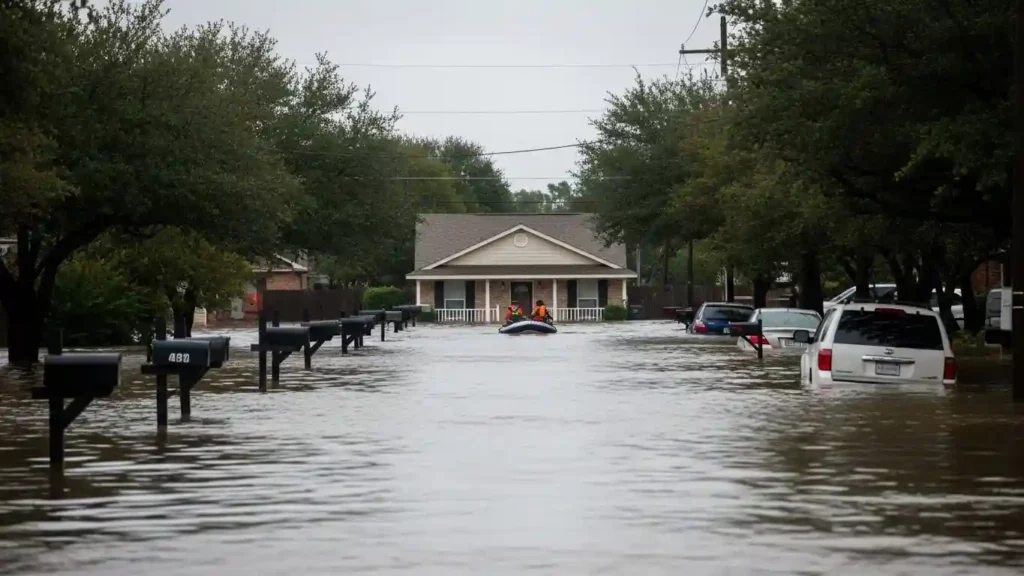
If you own a home in Texas, here’s something that might surprise you: your regular homeowners’ insurance doesn’t cover flood damage. Not even a little bit.
I know what you’re thinking, “But I don’t live near water,” or “My area never floods.” Unfortunately, that’s exactly what thousands of Texas homeowners thought before Hurricane Harvey dumped 50 inches of rain and caused over $125 billion in damage. Many of those families had no flood insurance and lost everything.
Texas has a complicated relationship with flooding. We get hurricanes along the coast, flash floods in Central Texas, and heavy rainfall that can overwhelm drainage systems anywhere in the state. Flooding doesn’t just happen near rivers and oceans; it can happen in your neighborhood after a severe thunderstorm.
The truth is, if you own property in Texas, you need to understand flood insurance. Whether you actually need to buy it depends on several factors, but knowing your options and risks is essential to protecting what’s probably your biggest investment.
Let me walk you through everything Texas homeowners need to know about flood insurance, what it covers, how much it costs, where to get it, and most importantly, whether you need it for your specific situation.
Understanding Flood Insurance: The Basics
Flood insurance is an independent policy designed exclusively to cover flood-related damages. It’s not included in standard homeowners insurance policies, renters insurance, or commercial property insurance.
Here’s the key distinction: flood insurance covers water that comes from outside your home and rises up. This includes:
Water from heavy rainfall that accumulates and enters your home. Storm surge from hurricanes pushes ocean water inland. Rivers, creeks, or bayous overflow their banks. Flash floods occur from sudden, intense rainfall. Melting snow or ice causes water accumulation (rare in Texas but possible). Mudflows caused by flooding.
What flood insurance doesn’t cover: water damage from a burst pipe, leaking roof, or backing up of sewers or drains (unless the backup is directly caused by flooding). Those issues fall under your regular homeowners policy or require additional coverage.
Most flood insurance policies in the United States come through the National Flood Insurance Program (NFIP), which is managed by FEMA. However, private flood insurance has become increasingly available in recent years, offering alternatives with potentially better coverage or pricing.
Why Standard Homeowners Insurance Doesn’t Cover Floods
You might wonder: why isn’t flood coverage automatically included in regular home insurance?
The answer comes down to risk and predictability. Insurance companies can reasonably predict how many house fires, burglaries, or hail damage claims they’ll face each year. But flooding is different; it’s catastrophic, affects entire regions at once, and causes devastating losses.
When a major flood hits, thousands or even tens of thousands of homes get damaged simultaneously. No private insurance company could handle that financial exposure without charging astronomical premiums or going bankrupt.
That’s why the federal government created the National Flood Insurance Program in 1968. The NFIP spreads the risk across the entire country and provides flood coverage that private insurers historically couldn’t or wouldn’t offer.
However, the landscape is changing. More private insurance companies now offer flood insurance as they develop better risk models and pricing structures. This gives Texas homeowners more options than ever before.
The National Flood Insurance Program (NFIP) Explained

The NFIP serves as the main provider of flood insurance for most Americans, including Texas homeowners. Gaining a clear understanding of how it works empowers you to make well-informed decisions about your coverage.
How NFIP Works
The NFIP is a federal program administered by FEMA. Your policy is sold through regular insurance agents and companies, but the federal government backs the coverage.
NFIP policies have standard coverage limits and pricing based on flood zone designations and other factors. The program requires communities to adopt and enforce floodplain management regulations in exchange for making NFIP insurance available to residents.
Currently, over 5 million NFIP policies are in force nationwide, with a significant number in Texas due to our coastal areas and flood-prone regions.
NFIP Coverage Limits
NFIP policies have maximum coverage limits that might not fully cover expensive homes:
Building coverage: Up to $250,000 for single-family homes. Contents coverage: Up to $100,000 for personal belongings. Commercial properties: Up to $500,000 for the building and $500,000 for contents.
If your home is worth more than $250,000, you’ll need either private flood insurance with higher limits or to accept that you’re not fully covered.
What NFIP Covers
NFIP building coverage includes:
The home’s foundation and structure. Electrical and plumbing systems. HVAC systems, water heaters, and appliances. Built-in appliances like dishwashers. Permanently installed carpeting and paneling. Detached garages (up to 10% of building coverage).
NFIP contents coverage includes:
Furniture and clothing. Electronics and appliances are not built-in. Portable air conditioners and microwaves. Carpets are not permanently installed. Washers and dryers. Artwork and collectibles (with limits).
What NFIP Doesn’t Cover
Important exclusions include:
Preventable damage caused by moisture, mildew, or mold. Currency, precious metals, and valuable papers. Property outside the building, like landscaping, pools, fences, and detached structures beyond garages. Additional living expenses while your home is uninhabitable. Financial losses from business interruption. Basement improvements like finished walls or flooring (only structural elements and essential systems are covered).
Understanding these limitations is crucial for deciding if you need additional coverage.
Private Flood Insurance: A Growing Alternative
In recent years, private flood insurance has emerged as a viable alternative to NFIP policies. Several private insurers now offer flood coverage with some significant advantages.
Benefits of Private Flood Insurance
Higher coverage limits: Many private policies offer coverage well beyond the NFIP’s $250,000 limit, which matters if you have an expensive home.
Replacement cost coverage: Some private insurers offer replacement cost for your home and belongings instead of actual cash value, meaning you get enough to replace items without depreciation deductions.
Additional living expenses: Many private policies cover hotel and food costs while your home is being repaired, which NFIP doesn’t.
Broader coverage: Private flood insurance may cover things NFIP excludes, like basement finishes, pools, and landscaping.
Potentially lower premiums: Depending on your property and location, private insurance might cost less than NFIP, especially after recent NFIP rate increases.
Better customer service: Private companies often provide faster claims processing and better customer support.
Considerations for Private Flood Insurance
Private flood insurance isn’t always better. Consider:
Availability: Not all private insurers operate in all Texas areas. Mortgage requirements: Some lenders only accept NFIP policies; verify your lender’s requirements. Policy differences: Coverage varies significantly between private insurers. Read policies carefully. Financial stability: Ensure the private insurer has strong financial ratings to pay claims after major disasters.
The best approach? Get quotes for both NFIP and private flood insurance to compare coverage and cost.
Understanding Flood Zones in Texas
Your property’s flood zone designation dramatically impacts whether you need flood insurance, how much it costs, and your overall flood risk.
What Are Flood Zones?
FEMA creates Flood Insurance Rate Maps (FIRMs) that designate flood zones based on flood risk analysis. These maps consider factors like:
Historical flooding data. Topography and elevation. Proximity to water bodies. Rainfall patterns and storm surge potential. Drainage systems and development.
Your flood zone determines your flood risk level and influences insurance requirements and premiums.
High-Risk Flood Zones
High-risk zones (also called Special Flood Hazard Areas or SFHAs) have a 1% or greater chance of flooding in any given year, referred to as the 100-year floodplain.
Zone A: Areas with 1% annual flood chance but no detailed analysis of flood depths.
Zone AE: Similar to Zone A but with determined Base Flood Elevations (BFEs).
Zone AO: Areas with 1-3 foot flood depths from sheet flooding.
Zone AH: Areas with 1-3 foot flood depths from ponding.
Zone V and VE: Coastal areas with 1% annual chance plus wave action and storm surge are the highest risk zones.
If you have a federally backed mortgage, flood insurance is required if you live in a high-risk flood zone.
Moderate-to-Low Risk Flood Zones
Moderate risk zones (0.2% annual flood chance, or 500-year floodplain):
Zone B and Zone X (shaded): Moderate flood risk areas.
Low risk zones:
Zone C and Zone X (unshaded): Minimal flood risk, though not zero.
Even in low-risk zones, flood insurance isn’t a bad idea about 25% of flood insurance claims come from moderate-to-low risk areas.
How to Find Your Flood Zone
Check your flood zone at:
FEMA’s Flood Map Service Center: Search by address at msc.fema.gov. Your mortgage documents should list your flood zone. Your local floodplain administrator or building department. Your insurance agent can look it up for you.
Texas has extensive coastal areas and many communities near rivers, creeks, and bayous, so many properties fall into high-risk zones.
Flood Insurance Costs in Texas
One of the biggest questions homeowners have: “How much will flood insurance cost me?”
The answer varies significantly based on multiple factors.
Average Flood Insurance Costs
In Texas, the average NFIP flood insurance premium is around $700-$800 annually, but this varies dramatically by location and property characteristics.
Coastal areas like Houston, Galveston, and Corpus Christi generally have higher premiums. Properties in high-risk flood zones pay substantially more than those in low-risk zones. Older homes built before flood maps were created often pay higher rates.
Factors Affecting Your Premium
Flood zone designation: High-risk zones cost significantly more than low-risk zones.
Base Flood Elevation (BFE): How high your home sits relative to the BFE for your area dramatically impacts cost. Homes below the BFE pay much higher premiums.
Construction date: Homes built before the community adopted flood maps (called pre-FIRM buildings) typically pay higher rates.
Building characteristics: Foundation type (slab, crawlspace, or basement), number of floors, and whether the home has an enclosure below the BFE all affect pricing.
Coverage amount: Higher coverage limits mean increased rates.
Deductible: Choosing a higher deductible lowers your premium.
Type of coverage: Building coverage and contents coverage are priced separately.
NFIP Rate Structure Changes
FEMA implemented Risk Rating 2.0 in October 2021, changing how flood insurance is priced. The new system uses:
Distance to water sources. Type of flood risk (coastal vs. riverine). Home value and rebuild cost. First-floor height relative to ground level.
For some Texas homeowners, rates decreased under the new system. For others, particularly those with expensive coastal properties, rates increased significantly, though increases are capped at 18% annually.
Private Insurance Costs
Private flood insurance premiums vary widely by insurer and property. In some cases, private policies cost less than NFIP, especially for:
Homes in moderate-to-low risk zones. Properties with flood mitigation features. Newer construction built to current standards. Homes elevated above the BFE.
Always compare private and NFIP quotes to find the best value.
Ways to Lower Your Flood Insurance Premium
Elevate your home: Raising your home above the BFE significantly reduces premiums.
Install flood vents: Properly engineered flood vents in enclosures can lower rates.
Obtain an Elevation Certificate: This document proves your home’s elevation relative to the BFE and might reduce premiums if your home is higher than FEMA assumed.
Increase your deductible: Higher deductibles mean lower annual premiums.
Remove basement coverage: If you have a basement with limited use, removing coverage for it can save money.
Shop private insurers: Compare private flood insurance quotes with NFIP rates.
Join community programs: Some communities participate in FEMA’s Community Rating System, which can provide policy discounts.
What Flood Insurance Actually Covers
Understanding exactly what your flood policy covers prevents surprises when you need to file a claim.
Building Coverage Details
Your building coverage protects the structure and permanently attached features:
Foundation and structural elements: Walls, floors, ceilings, and the foundation system.
Essential systems: Electrical, plumbing, and HVAC systems are covered.
Built-in fixtures: Cabinets, built-in bookcases, and permanently installed carpeting.
Major appliances: Furnaces, water heaters, and built-in dishwashers.
Detached garages: Covered up to 10% of your building coverage limit.
Contents Coverage Details
Contents coverage (which you must purchase separately, it’s not automatic) protects:
Personal belongings: Furniture, clothing, electronics, appliances.
Portable items: Window air conditioners, portable microwaves, and area rugs.
Valuable items: Artwork, collectibles, and electronics, though some limits may apply.
Basement contents: Limited coverage for items in basements; only certain items qualify.
Important Coverage Limitations
Temporary living expenses: NFIP policies don’t cover hotel, food, or other costs while your home is uninhabitable. Private policies often do.
Landscaping and outdoor property: Trees, plants, pools, fences, and detached sheds (beyond garages) aren’t covered.
Vehicles: Flood damage to cars is covered by comprehensive auto insurance, not flood insurance.
Financial documents and currency: Cash, stocks, bonds, and similar valuables aren’t covered.
Preventable damage: If you could have prevented mold or additional damage but didn’t, that damage isn’t covered.
How to Buy Flood Insurance in Texas
Ready to get coverage? Here’s how to purchase flood insurance.
Find an Insurance Agent
Most insurance agents who sell homeowners’ insurance also sell flood insurance. Contact your current home insurance agent first, they can easily add flood coverage.
If your agent doesn’t offer flood insurance, find one who does through:
FEMA’s website: Use their agent search tool at FloodSmart.gov. Private insurance companies: Contact companies offering private flood insurance directly. Independent insurance agents: They can quote both NFIP and private options.
Get Quotes from Multiple Sources
Don’t accept the first quote you receive. Compare:
NFIP rates from different agents (rates are standardized, but service varies). Private flood insurance quotes from multiple insurers. Coverage options and limits from each source. Policy features like replacement cost vs. actual cash value.
Provide Necessary Information
To quote your policy, agents need:
Your property address. Your flood zone designation. Information about your home’s construction and elevation. Your desired coverage limits and deductible. Your mortgage lender’s name is required for coverage.
An Elevation Certificate helps determine accurate pricing. If you don’t have one, a surveyor can prepare it for a few hundred dollars.
Understand the Waiting Period
There is a 30-day waiting period for flood insurance policies before coverage begins (with some exceptions).
Exceptions to the waiting period include:
Your lender now requires coverage for a mortgage. You’re purchasing during the initial map update period. You’re buying a home, and the policy takes effect at closing.
Don’t wait until a storm is forecast; you can’t buy coverage once flooding is imminent.
Purchase Your Policy
Once you select your coverage, you’ll:
Complete the application. Pay your first premium. Receive your policy documents. File proof of coverage with your lender if required.
Keep your policy documents in a safe place, preferably outside your home (like a safe deposit box or digital cloud storage), so they’re accessible even if your home floods.
Flood Insurance Claims: What to Expect
If your home floods, knowing the claims process helps you get compensation quickly.
Immediate Steps After a Flood
Ensure safety first: Don’t enter a flooded home until authorities say it’s safe. Electrical hazards and contaminated water pose serious risks.
Document everything: Take extensive photos and videos of all damage before cleanup. Document water levels with photos showing high-water marks.
Notify your insurance company immediately: Report your flood claim as soon as possible. Most policies require prompt notification.
Prevent additional damage: Take reasonable steps to prevent further damage, cover holes in the roof, and remove standing water. Save receipts for these emergency repairs.
Don’t throw away damaged items yet: Keep damaged items until the adjuster has seen them, unless they’re hazardous.
Filing Your Flood Insurance Claim
File a claim with your insurer. They’ll assign a flood adjuster to assess your damage.
Provide:
Your policy number. Description of what happened. Your contact information. List of damaged property. Photos and videos.
The adjuster will inspect your property, usually within a few days to weeks, depending on the scale of the disaster.
Working With the Adjuster
The flood adjuster documents damage and determines your payout. To help the process:
Be present during the inspection if possible. Point out all damage, don’t assume the adjuster will catch everything. Provide documentation of your belongings’ value, such as receipts or photos. Ask questions about what’s covered and what’s not.
Receiving Your Payout
After the inspection, the insurance company prepares a claim settlement. For NFIP policies, you’ll typically receive:
An advance payment for partial damage shortly after the adjuster’s visit. Final payment after complete damage assessment.
Payment timeframes vary, but most claims are paid within 30-60 days for standard situations. Major disasters affecting thousands of homes may take longer.
If You Disagree With the Settlement
If you believe your settlement is too low:
Request a detailed breakdown of the adjuster’s assessment. Provide additional documentation supporting higher damage estimates. Request a re-inspection or second opinion. Consider hiring a public adjuster to advocate for you. File an appeal with the insurance company.
For NFIP policies, you can ultimately appeal to FEMA if disputes aren’t resolved.
Common Flood Insurance Mistakes to Avoid
Don’t make these common errors that leave Texas homeowners vulnerable.
Assuming You Don’t Need Coverage
The biggest mistake is thinking “it won’t happen to me.” If you live in Texas, flooding is possible, regardless of your flood zone designation.
About 40% of flood claims come from properties outside high-risk zones. Don’t rely on flood maps alone to assess your risk.
Waiting Until the Last Minute
Remember the 30-day waiting period. When a hurricane is forecast, it’s too late to buy flood insurance.
Purchase coverage during calm weather, not when storms threaten.
Not Reading Your Policy
Many homeowners don’t understand what their flood policy covers until they file a claim and get unpleasant surprises.
Read your policy carefully. Ask your agent questions about:
Coverage limits. What’s included and excluded. Your deductible amounts. How claims are paid (replacement cost vs. actual cash value).
Underinsuring Your Property
Some homeowners buy minimal coverage to save money, then face huge out-of-pocket costs after major flood damage.
Insure the full value of your home and belongings. While NFIP limits may not fully cover expensive homes, get as much coverage as you can.
Forgetting Contents Coverage
Building coverage and contents coverage are separate. Many homeowners purchase building coverage only and forget their belongings.
Your furniture, electronics, clothing, and other possessions aren’t covered unless you buy contents coverage. Add this to your policy.
Not Updating Coverage
As you make home improvements or buy valuable items, your coverage needs change. Review your policy annually and increase limits if needed.
Canceling After a Couple of Years
Some homeowners cancel flood insurance after a few years without flooding, thinking they don’t need it anymore.
Flooding is unpredictable. The fact that you haven’t flooded yet doesn’t mean you won’t. Maintain continuous coverage for protection.
Not Documenting Possessions
Many homeowners can’t prove what they owned before a flood, making contents claims difficult.
Create a home inventory with photos or video of your belongings. Store it digitally off-site so it’s accessible after a flood.
The Bottom Line: Is Flood Insurance Worth It?
For Texas homeowners, flood insurance is absolutely worth considering, and in many cases, essential.
If you’re in a high-risk flood zone, it’s mandatory with a mortgage anyway. But even if you’re not required to have it, think about this:
One major flood can cause $50,000, $100,000, or more in damage. Your homeowners’ insurance won’t pay a cent of it. FEMA assistance might provide $5,000-$10,000 at most. Without insurance, you’ll pay all repair costs yourself or face foreclosure if you can’t afford repairs.
Compare that to paying $700-$1,500 annually (average in Texas) for flood coverage. Even if you pay premiums for 20 years without flooding, you’re still better off than facing one major uninsured flood.
Flood insurance isn’t an expense, it’s protection for what’s likely your largest financial asset. In a state where flooding can happen anywhere, anytime, being uninsured is simply too risky.
The real question isn’t “Can I afford flood insurance?” It’s “Can I afford not to have it?”
Protect Your Texas Home From Flood Damage Today
You’ve learned everything you need to know about flood insurance in Texas, what it covers, how much it costs, where to get it, and why it matters.
Now it’s time to take action and protect your home.
Don’t wait until the next hurricane forms in the Gulf or the next severe storm system approaches. Remember, flood insurance has a 30-day waiting period, so tomorrow might be too late.
Here’s what to do right now:
Check your flood zone at FEMA’s website to understand your risk level.
Get quotes from both NFIP and private insurers to compare coverage and costs.
Talk to your insurance agent about adding flood coverage to protect your home and belongings.
Review your current coverage if you already have a policy; make sure it’s adequate.
Don’t assume FEMA will save you if disaster strikes. Take control of your financial protection today.
Ready to protect your Texas home with flood insurance?
At Gettia, we make getting flood coverage simple and stress-free. We help Texas homeowners compare NFIP and private flood insurance options to find the best coverage at the most competitive price.
Here’s why Texas homeowners choose Gettia: IN CARD
✓ Compare multiple options – We quote both NFIP and private flood insurance so you get the best deal.
✓ Expert Texas knowledge – Our team understands Texas flood risks, zones, and requirements.
✓ Fast quotes – Get your flood insurance quote in minutes, not days.
✓ Easy online process – Apply and purchase coverage completely online from your phone or computer.
✓ Claims support – We’re here to help when you need to file a flood claim.
✓ No pressure – Get informed quotes and advice without pushy sales tactics.
Get your free flood insurance quote now at gettia.com or call us to speak with a Texas flood insurance specialist.
Don’t wait until it’s too late. Protect your home, your belongings, and your financial future with proper flood coverage today.
Visit gettia.com now to get started – because when the next flood comes, you’ll be glad you did.
Frequently Asked Questions About Flood Insurance in Texas
Do I need flood insurance if I’m not near water?
Yes. Around 25% of flood claims come from low-to-moderate risk areas. Texas gets flash floods anywhere, not just near rivers or coasts. Many homes flooded during Hurricane Harvey had never flooded before.
How much does flood insurance cost in Texas?
Average cost is $700–$800/year, but varies by flood zone, elevation, construction, and coverage. High-risk zones can pay $2,000–$5,000+. Low-risk areas may pay $400–$600. Private flood insurance may be cheaper than NFIP.
NFIP vs. Private Flood Insurance: What’s the difference?
NFIP: federal program, sets coverage limits ($250K building, $100K contents).
Private: higher limits, broader coverage, may include living expenses, and sometimes lower premiums. Availability varies, and some lenders require NFIP.
Can I buy flood insurance right before a hurricane?
No. There is a 30-day waiting period. By the time a storm is forecast, it’s too late. Exceptions apply only to new mortgages, map updates, or home closings.
Does flood insurance cover personal belongings?
Only if you add content coverage. Building coverage alone does not protect furniture, electronics, or clothing. NFIP covers up to $100K; private insurers may offer more.
What should I do right after flooding?
Stay safe and avoid entering until cleared. Report your claim immediately, document all damage with photos/videos, prevent further damage, keep receipts, and don’t throw items away until the adjuster sees them.
Will FEMA pay for flood damage if I’m uninsured?
FEMA help is limited grants average $5,000–$10,000. SBA loans must be repaid. Flood insurance claims typically pay $30,000–$50,000+, offering far better recovery.
Can I get flood insurance if I have a basement?
Yes, but NFIP offers very limited basement coverage (structure and essential systems only). No coverage for finished walls, flooring, or belongings. Some private insurers offer better basement protection.